2600 in to mm
2600 Inches to Millimeters
2600 Inch to Millimeter converter
When discussing measurements in both inches and millimeters, it is essential to recognize the significance of precise dimensions in various fields such as engineering, construction, manufacturing, and design. The length of 2600 inches is equivalent to 66040 millimeters, a conversion that is crucial for professionals who work in areas requiring exact specifications. This measurement can be relevant in numerous applications, including the design of large structures, machinery, and components where accurate length is imperative for functionality and safety. In the context of construction, understanding the implications of a length of 2600 inches allows architects and engineers to visualize and plan spaces effectively. For instance, this length can represent the span of a large beam, the width of a substantial wall, or the length of a long corridor. Accurate conversions between inches and millimeters facilitate international collaboration, as different countries may predominantly use one measurement system over the other. For instance, the United States primarily uses the imperial system, while many other countries utilize the metric system, making conversions between these units essential for global projects. In manufacturing, precision is key. A measurement of 2600 inches, or 66040 millimeters, may pertain to the production of large-scale items such as industrial equipment, vehicles, or custom components. Engineers must ensure that all parts fit together seamlessly, and understanding the exact dimensions in both imperial and metric systems helps prevent costly errors. Furthermore, in fields such as textiles and materials science, knowing the dimensions in both units can assist in calculating material quantities, optimizing designs, and ensuring compliance with industry standards. In design applications, whether for products, furniture, or art installations, a length of 2600 inches can provide a foundational scale for creative projects. Designers must consider how this measurement fits within the context of the overall design, ensuring functionality while maintaining aesthetic appeal. The ability to convert between inches and millimeters allows designers to present their work to a broader audience, accommodating both imperial and metric preferences. When it comes to logistics and transportation, the understanding of dimensions such as 2600 inches is crucial for planning and executing the movement of goods. Knowing how to convert to millimeters aids in the preparation of shipping documents and ensures compliance with shipping regulations, which often require measurements in metric units. In summary, the length of 2600 inches, or 66040 millimeters, plays a vital role across various sectors, highlighting the importance of precision and the ability to convert measurements accurately. Whether it is in construction, manufacturing, design, or logistics, having a firm grasp of this measurement allows professionals to communicate effectively, optimize processes, and achieve successful outcomes in their respective fields. Understanding and utilizing the conversion between these two measurement systems enhance collaboration and efficiency, ensuring that projects are completed on time and to specification.
How to convert 2600 Inches to Millimeter?
| 2600 in * | 25.4 mm | = 66040 mm |
| 1 in |
A common question is How many inch in 2600 millimeter? And the answer is 102.362205 in in 2600 mm. Likewise the question how many millimeter in 2600 inch has the answer of 66040 mm in 2600 in.
How much are 2600 Inches in Millimeters?
2600 Inches equal 66040 Millimeters (2600 in = 66040 mm). Converting 2600 in to mm is easy. Simply use our calculator above, or apply the formula to change the length 2600 in to mm.
Convert 2600 in to common Lengths
| Unit | Lengths |
|---|---|
| Nanometer | 66039999999.99999 nm |
| Micrometer | 66040000 µm |
| Millimeter | 66040 mm |
| Centimeter | 6604 cm |
| Foot | 216.666667 ft |
| Yard | 72.222222 yd |
| Meter | 66.04 m |
| Kilometer | 0.06604 km |
| Mile | 0.041035 mi |
| Nautical Mile | 0.035659 nmi |
What is 2600 Inches in mm?
To convert 2600 in to mm multiply the Lengths in by 25.4. The 2600 in in mm formula is [mm] = 2600 * 25.4. Thus, for 2600 Inches in Millimeter we get 66040 mm.
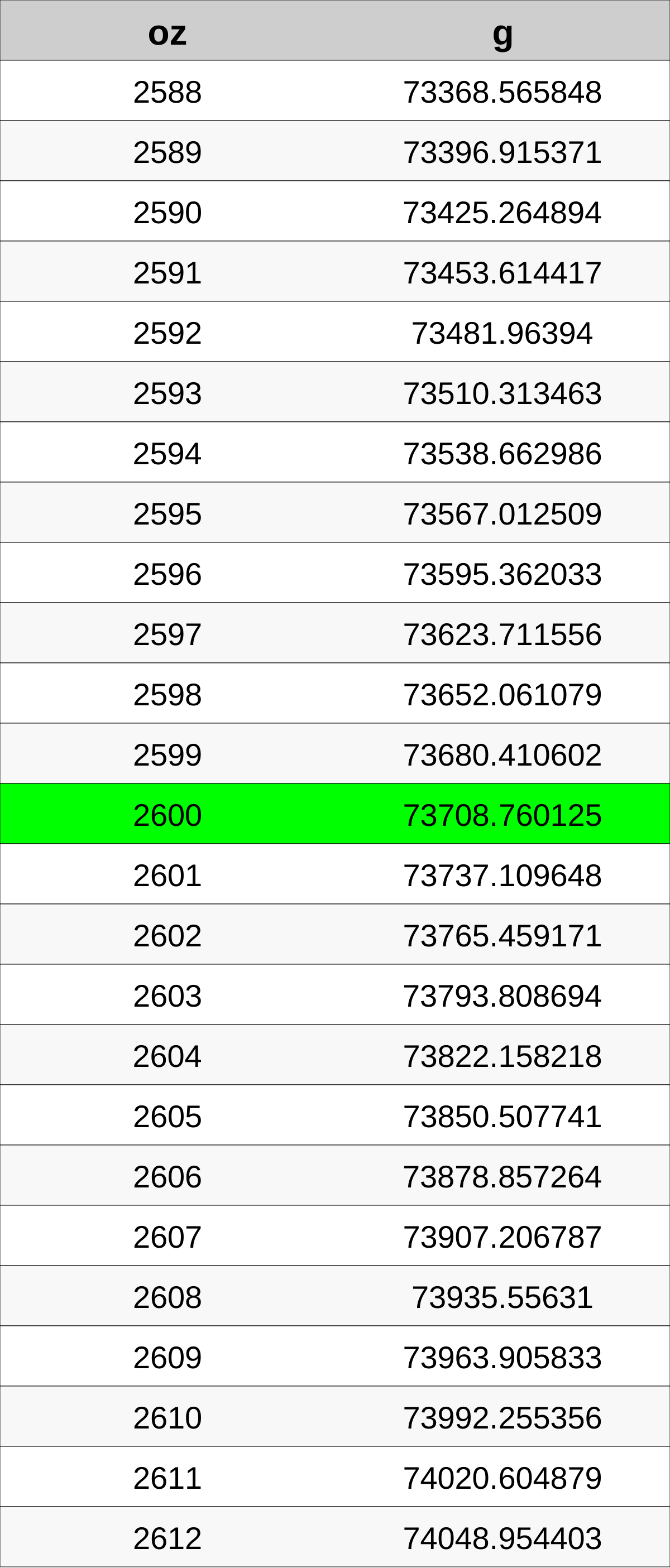
2600 Inch Conversion Table
Further Inch to Millimeter calculations
- 2500 in to Millimeters
- 2510 in to mm
- 2520 Inches to Millimeters
- 2530 in to mm
- 2540 Inches to Millimeters
- 2550 in to Millimeter
- 2560 Inches to mm
- 2570 Inches to Millimeters
- 2580 Inches to Millimeters
- 2590 Inches to Millimeter
- 2600 Inches to Millimeter
- 2610 Inches to mm
- 2620 in to Millimeters
- 2630 in to Millimeters
- 2640 in to mm
- 2650 in to mm
- 2660 in to Millimeter
- 2670 in to Millimeters
- 2680 in to Millimeter
- 2690 in to Millimeters
- 2700 in to Millimeter
Alternative spelling
2600 in to mm, 2600 in into mm, 2600 in in mm, 2600 Inch to Millimeter, 2600 Inch into Millimeter, 2600 Inch in Millimeter, 2600 Inches to Millimeters, 2600 Inches into Millimeters, 2600 Inches in Millimeters, 2600 Inch to mm, 2600 Inch into mm, 2600 Inch in mm, 2600 in to Millimeter, 2600 in into Millimeter, 2600 in in Millimeter, 2600 Inches to mm, 2600 Inches into mm, 2600 Inches in mm, 2600 in to Millimeters, 2600 in into Millimeters, 2600 in in Millimeters
Further Languages
- 2600 Inches To Mm
- 2600 инч в милиметър
- 2600 Palec Na Milimetr
- 2600 Tomme Til Nillimeter
- 2600 Zoll In Millimeter
- 2600 ίντσα σε χιλιοστόμετρο
- 2600 Pulgada En Milímetro
- 2600 Toll Et Millimeeter
- 2600 Tuuma Millimetri
- 2600 Pouce En Millimètre
- 2600 Palac U Milimetar
- 2600 Hüvelyk Milliméter
- 2600 Pollice In Millimetro
- 2600 Colis Iki Milimetras
- 2600 Pulzier Fil Millimetr
- 2600 Inch Naar Millimeter
- 2600 Cal Na Milimetr
- 2600 Polegada Em Milímetro
- 2600 Țol în Milimetr
- 2600 Palec Na Milimeter
- 2600 Inch Till Millimeter
- 2600 Duim In Millimeter
- 2600 مليمتر إلى بوصة
- 2600 Düym Millimetr
- 2600 ইঞ্চি মধ্যে মিলিমিটার
- 2600 Polzada A Mil·límetre
- 2600 इंच से मिलीमीटर
- 2600 Inci Ke Milimeter
- 2600 ミリメートルまでのインチ
- 2600 인치 밀리미터
- 2600 Tomme Til Millimeter
- 2600 дюйм в миллиметр
- 2600 Palec V Milimeter
- 2600 Inç Në Milimetri
- 2600 นิ้วมิลลิเมตร
- 2600 ઇંચ મિલિમીટર
- 2600 İnç Milimetre
- 2600 дюйм в міліметр
- 2600 Inch Sang Milimét
- 2600 英寸为毫米
- 2600 英寸至毫米
- 2600 Inches To Millimetres